It is 6pm on a Wednesday. You’ve homeschooled through the afternoon, there’s a
meeting that ran long, someone needs help with maths, the laundry is on the line, and
dinner needs to happen in 30 minutes. This is the moment most of us reach for a
shortcut we’re not proud of.
But if you cooked the base sauce on Sunday, Wednesday at 6pm looks completely
different. You open the fridge or freezer, pull out a container of deeply roasted tomato
and garlic sauce, and dinner is half done before you’ve filled the pot.
This is not meal prep in the modern influencer sense — individual containers of pre-
portioned lunches. This is something older and more intelligent: batch processing the
hard part of the meal, the labour-intensive foundational cooking, so that the rest of the
week’s cooking becomes assembly rather than construction.
The Logic of the Base Sauce
In classical French cooking, the ‘mother sauces’ are the foundational preparations —
béchamel, velouté, espagnole, hollandaise, tomat — from which all other sauces derive.
The principle is elegant: master the base, and the variations are infinite.
We’re borrowing that principle for the home kitchen, not to be classical or fancy, but
because it is genuinely the most time-efficient way to cook for a busy family.
The base sauce I return to most consistently is a roasted tomato and garlic base — rich,
deeply flavoured from a long oven roast, with enough body and complexity to carry any
direction you choose to take it during the week.
The Base Sauce: Roasted Tomato and Garlic
This recipe is designed for large-batch production — make a full stock pot and portion it
into 400ml or 500ml portions to match your family size.
- Ingredients for Large Batch (approximately 8–10 portions of 400ml)
- 3kg ripe tomatoes (Roma or any firm variety), halved
- 2–3 full heads of garlic, unpeeled
- and halved crosswise
- 2 large onions, roughly quartered
- 100ml olive oil
- 2 teaspoons sea
- salt
- 1 teaspoon sugar
- Fresh thyme, rosemary, or bay if available
- Optional: 1 tin of good
- quality whole tomatoes to extend
Step 1: Roast — This Is the Non-Negotiable Step
Arrange the tomatoes, garlic heads, and onion in large roasting trays. Drizzle with olive
oil, season well. Roast at 220°C for 45–60 minutes until deeply caramelised and
blackened at the edges. This step is not optional. This is the Maillard reaction and
caramelisation building the depth of flavour that makes this sauce work across multiple
applications. Do not skip it to save time.
Step 2: Blend and Season
Squeeze the roasted garlic from its skins directly into the pot. Add the tomatoes, onions,
and all the roasting juices — including the fond from the tray (deglaze with a splash of
water if needed). Blend with a stick blender to your preferred texture. Taste and adjust
seasoning. The sauce should taste deeply savoury, slightly sweet, and rounded.
Step 3: Portion and Preserve
Allow the sauce to cool completely before portioning. Portion into your chosen
containers by your family meal size — 400ml for a family of four as a pasta sauce, 500ml
if you’re adding significant bulk protein. Label with the date and sauce name.
Three Weeknight Meals From One Base
Monday: Bolognese
Brown 500g of minced beef or lamb in a hot pan until well caramelised (the Maillard
reaction again — dry the mince, use high heat, don’t crowd the pan). Add one 400ml
portion of base sauce, a splash of whole milk (this is a traditional Italian addition that
softens the acidity and adds richness), and simmer for 20–25 minutes. Add a bay leaf.
Serve with pasta or polenta.
Active cooking time: 30 minutes. Flavour: deeply satisfying, complex, and genuinely
better than a sauce built from scratch in the same time.
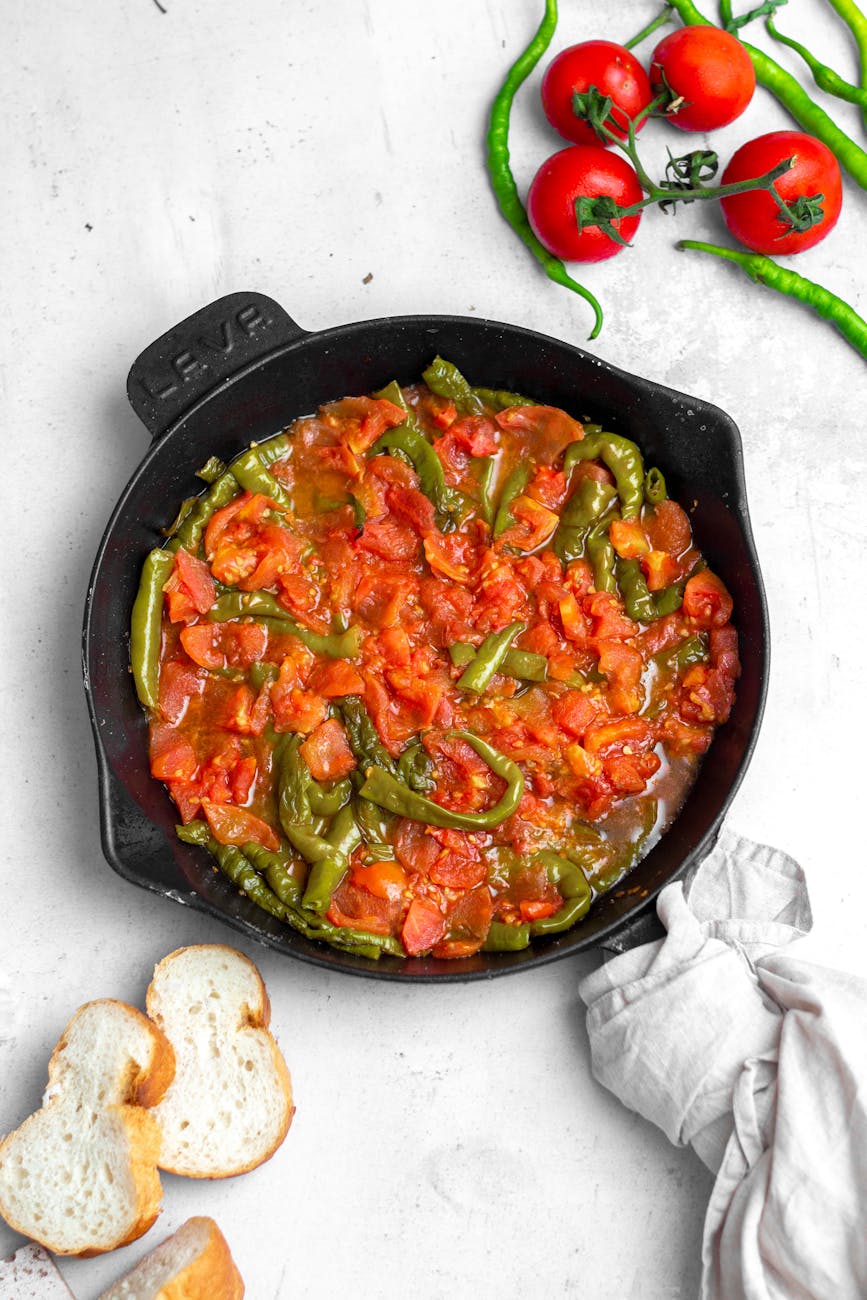
Wednesday: Shakshuka
Heat one 400ml portion of base sauce in a wide pan with a lid. Add a teaspoon of cumin,
a teaspoon of smoked paprika, a pinch of chilli, and a teaspoon of harissa paste if
available. Taste and adjust. When the sauce is hot and bubbling, create four to six
shallow wells with a spoon and crack one egg into each well. Cover the pan and cook on
medium-low heat for 6–8 minutes until the whites are set but the yolks are still runny.
Scatter with crumbled feta, fresh herbs, and serve directly from the pan with good
bread.
Active cooking time: 20 minutes. The base sauce does 90% of the work.
Friday: Winter Vegetable Soup
Fry whatever vegetables need using — a diced potato, a handful of lentils, a leek,
whatever root vegetables are in the drawer — in olive oil until starting to soften. Add one
400ml portion of base sauce and 600–800ml of stock or water. Simmer for 20–25
minutes until everything is tender. Use a stick blender if you prefer a smooth soup, or
serve as-is for a chunkier, more rustic result. Season and finish with a drizzle of olive oil
and torn sourdough croutons.
Active cooking time: 30 minutes. A deeply flavoured, genuinely satisfying Friday night
soup made almost entirely from what’s in the house.
Storage Logic: Freezing vs. Pressure Canning
Freezing (Most Accessible)
Allow sauce to cool completely. Portion into heavy-duty freezer bags (laid flat for
efficient storage and quick thawing) or rigid freezer-safe containers. Leave 2–3cm
headspace for expansion. Label with contents, date, and portion size. Use within 3–4
months for best flavour. Defrost overnight in the fridge or in a pot from frozen on low
heat.
Pressure Canning (For Shelf-Stable Storage)
A tomato-based sauce with roasted onions and garlic falls into the low-acid category and
requires pressure canning rather than water-bath canning for safe shelf storage. Process
at 10–12 PSI (adjusted for altitude) for 25–35 minutes in pint jars, following a tested
recipe from a reliable source such as the Ball Blue Book or the USDA Complete Guide.
When correctly processed, shelf life is 12–18 months.
If you are new to pressure canning, please refer to The First Harvest course in the
Hearth & Larder education library before beginning.
Batch Processing the Hard Part
The systems-first kitchen doesn’t mean cooking everything in advance. It means
identifying the time-intensive, labour-heavy steps in a week of cooking — the long
roasting, the deep seasoning, the building of flavour — and doing them once, in bulk,
when you have time and energy.
Everything that follows is assembly. And assembly is what 6pm on a Wednesday can
handle.
Batch processing the base sauce on a Sunday — one two-hour cook — produces 8–10
portions of deeply flavoured roasted tomato base that becomes Bolognese, Shakshuka, soup,
and more across the week. This is the systems-first kitchen: invest in the foundation once,
and the rest of the week’s cooking becomes effortless assembly.
With Warmth,
Marlé
→ Related: The Maillard Reaction: Why Roasting the Tomatoes First Matters
→ Related: Canning for Beginners
→ Related: The FIFO Audit: Making Sure Your Base Sauce Gets Used