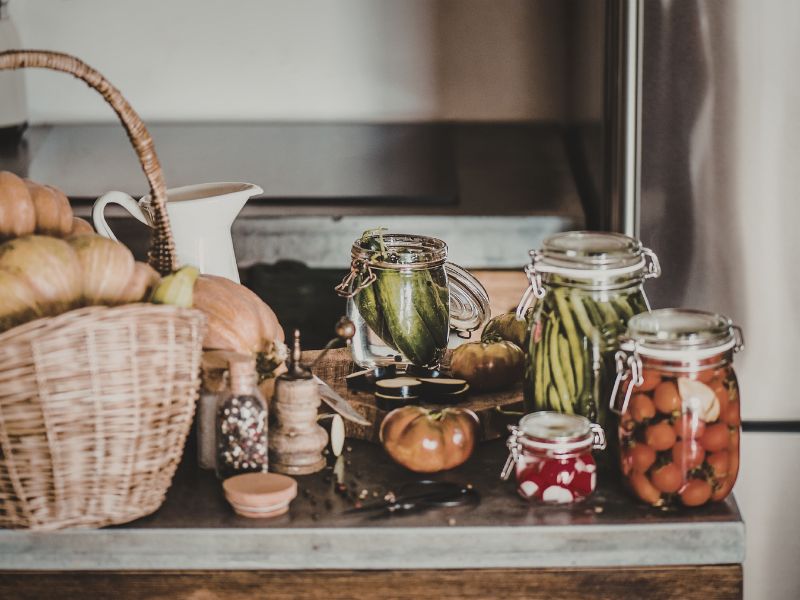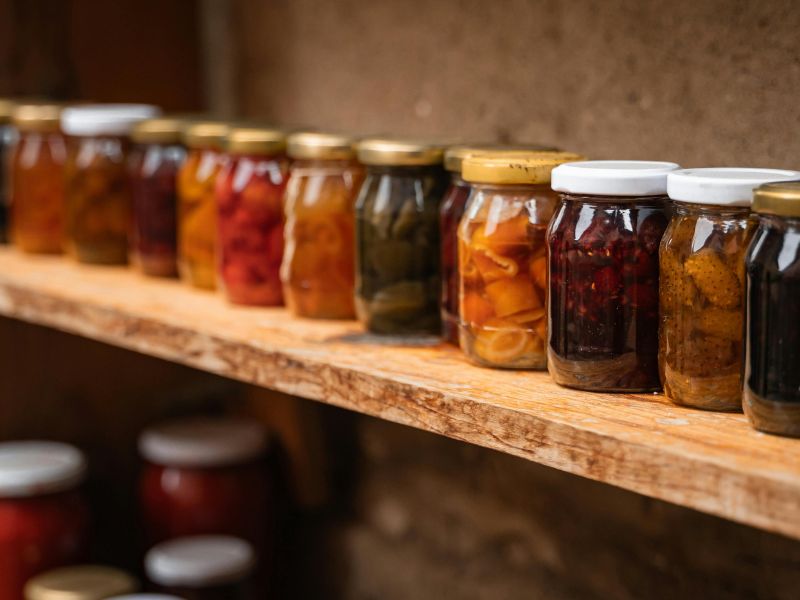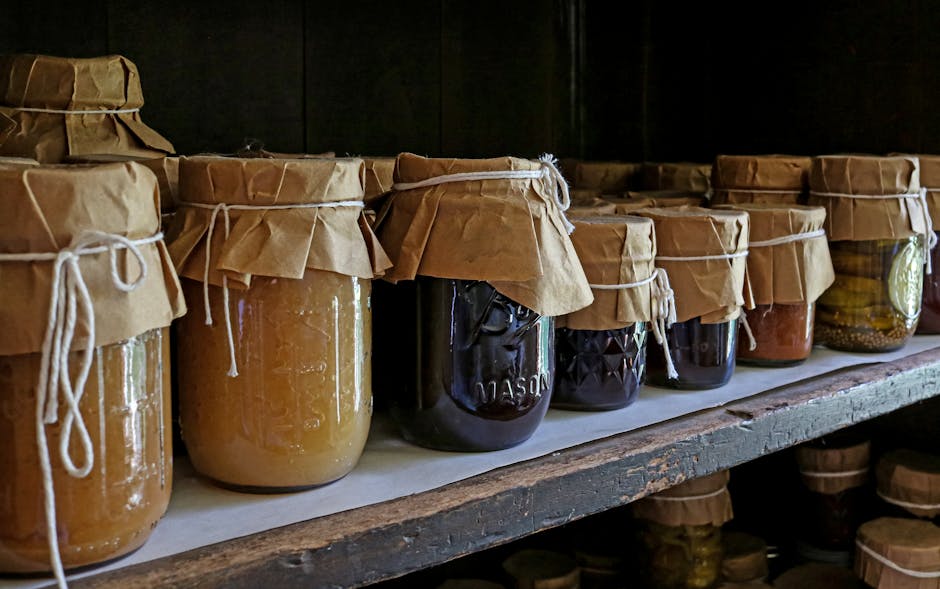
There is a shelf in my kitchen that I love more than almost anything else in my home. It holds jars. Rows of them, filled with things I made with my own hands — fig jam from last April, bottled pears from a friend’s tree, pickled beetroot with its deep jewel colour, a chutney that took three hours and the entire house smelling like vinegar and spice.
Every one of those jars represents something. A season captured. A skill practised. A meal that does not need to be bought.
Food preservation is one of the oldest skills a human being can possess. And for a long time, it felt like it was dying — squeezed out by supermarkets and convenience food and the idea that buying something in a tin was somehow more practical than making it yourself. But something is shifting. All over South Africa, in kitchens from the highveld to the coast, women are going back to basics. They are pulling out their oumas’ recipes. They are buying preserving jars. They are learning — or remembering — how to put things up.
This post is about why. And it is about how you can be part of it.
Preservation Is Woven Into South African DNA
Food preservation is not a trend for South Africans. It is a heritage.
Long before refrigerators arrived in the family kitchen, every South African household — across cultures and traditions — had systems for keeping food. The Voortrekkers made biltong and droëwors because they needed protein that could survive a journey of months across the veld without spoiling. The skill was not optional. It was survival.
In Afrikaner farm kitchens, the tradition of konfyt — thick, syrupy fruit preserves made with everything from figs to watermelon rind to green tomatoes — was as fundamental as baking bread. A woman who kept a well-stocked konfyt shelf was a woman who knew how to run a home. Koejawel konfyt, appelkoos konfyt, lemoene marmalade — these were not luxuries. They were the measure of a capable kitchen.
Cape Malay cooking brought its own traditions — pickling and spicing, the sweet-sour complexity of atchar and sosaties and fruit pickles that owe their origins to Indonesian and Malaysian techniques carried here across the ocean. Indian communities in KwaZulu-Natal brought lime pickle, mango atchar and the bold, vinegary preserves that still sit on South African tables today.
Every culture that makes up this country brought a preservation tradition with it. Because every culture understood the same truth: the season does not last forever. You use what you have while you have it, and you find a way to make it last.
That knowledge did not disappear. It is simply waiting to be used again.
Why Preservation Fell Away — And Why It Is Coming Back
For several decades in the late twentieth century, preservation fell out of fashion in many households. Refrigerators became affordable. Supermarkets multiplied. Tinned goods became cheap and convenient. The message — often delivered subtly through advertising — was that making things yourself was old-fashioned. That a modern woman had better things to do than stand over a pot of jam.
Many women listened. And something was lost.
But in 2026, the pendulum has swung back decisively. And it has done so for reasons that are both practical and deeply personal.
The practical reason is the cost of living. Food prices have risen sharply. A jar of decent jam at the supermarket costs far more than the fruit and sugar needed to make three jars at home. A bottle of preserved tomatoes costs far more than bottling a full batch during peak tomato season. When the grocery bill is a source of anxiety, learning to preserve becomes a genuinely powerful financial strategy. Every jar on your shelf is a rand you did not spend at the till.
The personal reason is harder to name but just as real. There is a hunger — and I mean this quite literally — for the feeling of having made something. Of knowing exactly what went into the food your family eats. Of handing a jar of homemade jam to a friend and watching their face when they open it. Of teaching your daughter to stir the pot and label the jar and understand where food comes from.
This is not nostalgia. It is a reclaiming. A generation of women is deciding that these skills are worth having — and worth passing on.
What Preservation Actually Is
Before we go further, let me clear something up. Food preservation is not complicated. It has a reputation for being technical and scary, and that reputation is largely undeserved.
At its heart, preservation is simply the use of heat, acid, salt, sugar or drying to create conditions in which bacteria and mould cannot grow. Every method that exists — canning, bottling, pickling, fermenting, drying, making jam — works on one of these principles.
The methods that are most accessible for the home kitchen are:
- Bottling and water bath canning — fruit and high-acid foods are packed into sterilised jars and processed in boiling water. This is how you preserve whole fruit, tomatoes, jams and fruit juices. It is the method your grandmother used.
- Pickling — vegetables or fruit are preserved in a vinegar brine, sometimes with sugar and spices. Pickled beetroot, pickled onions, atchar, gherkins — all pickles. One of the easiest methods to learn and one of the most forgiving.
- Jam and confits — fruit cooked with sugar until it reaches setting point. The sugar creates an environment where bacteria cannot survive. Fig jam, apricot jam, quince jelly, marmalade — all made on this principle.
- Drying and dehydrating — removing moisture from herbs, chillies, fruit or vegetables so that bacteria have nothing to work with. Hanging chillies, drying herbs, making fruit roll — this is the simplest method of all.
- Fermentation — using beneficial bacteria to transform food into something more complex and shelf-stable. Sauerkraut, kimchi, kombucha, sourdough, yoghurt — all fermented foods. We will go deeper into fermentation in a future post.
You do not need to master all of these. You need to start with one.
What You Need to Get Started
The barrier to home preservation is lower than most people think. You do not need specialist equipment for most methods. You need:
A large pot — big enough to submerge your jars in boiling water. Most kitchens already have this.
Glass preserving jars with new lids — available at most supermarkets, hardware stores and kitchen shops across South Africa. Second-hand jars are fine as long as the lids are new.
A jar lifter or a pair of tongs — for safely moving hot jars.
A kitchen scale and basic measuring equipment.
And the ingredients themselves — fruit, vegetables, sugar, vinegar, salt — most of which you already have or can buy affordably in season.
That is genuinely all you need to make jam, pickled vegetables or bottled fruit. The rest — the technique, the timing, the confidence — comes with practice. And we have done the work of putting it all together for you.
Our preservation kits at Hearth & Larder are designed for exactly this moment — when you want to start but are not sure where to begin. Each kit contains the tools you need, step-by-step instructions written for the South African home, and everything measured and organised so that your first batch is a success rather than a guessing game. Browse the range at our shop.
The Deeper Reason to Preserve
I want to say something that goes beyond the practical arguments — beyond the grocery bill and the shelf-stable jars and the smart pantry strategy.
When you learn to preserve food, you change your relationship with your kitchen. You stop being a passive consumer of what the supermarket decides to stock, at the price they decide to charge, in the season they decide to offer it. You become active. You become capable. You become someone who looks at a box of ripe figs and thinks: I know what to do with this.
That is a shift that goes deep. It changes how you feel in your own home. It changes what you model for your children. A child who watches their mother make jam does not just learn how to make jam. They learn that food comes from somewhere. That skills have value. That a woman who knows her kitchen is a powerful thing.
This is the tradition that South African women have always carried, across every culture that makes up this country. The Voortrekker woman who cured meat for the journey. The ouma who kept the konfyt shelf full. The Cape Malay grandmother whose atchar recipe has been passed down for five generations. The Indian aunty whose lime pickle is still the best anyone has ever tasted.
They all understood something that we are remembering now: that the hands that preserve the harvest are the hands that feed the family. And that is worth learning. Worth practising. Worth passing on.
Your Next Step
If this has stirred something in you — a memory of a grandmother’s kitchen, a desire to try something new, a practical decision to get more value from this season’s produce — here is what I suggest.
Start with one thing. One method. One batch.
Read our autumn preservation guide for what is in season right now and what to make with it — [INSERT LINK TO BLOG #5]. Stock your pantry with the basics before you begin — [INSERT LINK TO BLOG #1]. And if you want a monthly guide that tells you what to preserve season by season, all year round, The Homemaker’s Almanac was built for exactly that.
The shelf I described at the beginning of this post did not fill itself overnight. It was built one jar at a time, one season at a time. Yours can be too.
With Warmth,
Marlé