For South African families ready to trade the mental load of homemaking for the deep satisfaction of a home that’s truly in rhythm with the seasons.
If you’ve ever searched for “how to stock a larder in South Africa” and found only British pantry guides or American homesteading blogs, you’re not alone — and you’re exactly who this post is for.
Building a well-stocked larder in South Africa looks different to anywhere else in the world. Our seasons run the opposite direction. Our produce is different. Our heritage — the influences of Afrikaner, Cape Malay, Zulu, and British kitchen traditions — means our larders tell a uniquely South African story. And yet most of the resources out there aren’t written for us, our climate, or our table.
That gap is exactly what led me to create The Homemaker’s Almanac. And before I tell you what it is, I want to tell you why it exists — because I think the why matters a great deal.
Why South African Families Are Returning to the Larder
There’s a quiet movement happening in South African homes. After years of convenience food, load-shedding-related grocery anxiety, and rising food costs, more and more families are rediscovering what our grandmothers knew instinctively: a stocked larder isn’t a luxury — it’s a foundation.
A well-stocked larder means fewer panic-shopping trips. It means you’re not at the mercy of every price hike or empty shelf. It means your children grow up understanding that food has a season, that abundance can be preserved, and that a meal from scratch tastes different to one from a packet — better, in every way that matters.
But stocking a larder well requires more than just buying extra tins. It requires knowing what’s in season, how to preserve it, and how to build a rhythm that turns a once-off effort into a sustainable way of managing your home. That’s where seasonal food preservation becomes the practical heart of the whole project.
What is a Larder?
A larder is a cool, organised storage space for food — traditionally kept separate from the fridge and used to store preserved goods, grains, dried herbs, canned produce, and seasonal staples. Unlike a modern pantry stocked with processed goods, a true larder is built around ingredients you’ve preserved yourself: jams, pickles, dried beans, fermented vegetables, and the bottled fruits of each passing season. In a South African context, a well-stocked larder might hold bottled quinces from your autumn harvest, dried chillies from summer, and a shelf of bone broths for the cold highveld winter ahead.
Seasonal Food Preservation in South Africa: Building a Larder That Lasts
South Africa’s seasonal calendar is rich — and it’s the opposite of the northern hemisphere. Our summer is your winter. Our autumn harvest (April–May on the highveld) is the time to be bottling tomatoes, preserving pears, and drying herbs before the first frost. If you’re following recipes from European or American sources, you’re always a season behind.
Seasonal food preservation in the South African context means working with what grows here, when it grows here. It means building a larder around our summer stone fruits, our autumn quinces and apples, our winter root vegetables, and our spring herbs. And it means understanding the science well enough to do it safely — because real preservation knowledge isn’t just about following a recipe; it’s about understanding why the process works.
“The home should be a laboratory of learning. When you understand the why behind a skill — the chemistry of canning, the logic of a seasonal pantry — you stop following instructions and start making decisions. That’s when it gets good.”
This is what I call the “Scientific Cottagecore” heart of the Hearth & Larder approach. It’s not nostalgia for its own sake. It’s the belief that understanding the science behind your kitchen skills is what separates someone who tried canning once from someone who builds a larder every single year.
What Intentional Homemaking Actually Looks Like — for South African Families
Intentional homemaking is one of those phrases that can feel either deeply meaningful or slightly overwhelming depending on where you’re starting from. So let me be practical about what it actually looks like in a South African home.
It looks like knowing that April is the time to bottle your last summer tomatoes, because by May they’ll be gone from the market. It looks like teaching your child to make bread not as a cute activity, but as a real skill — one that will save you money, feed your family well, and give them something to pass on. It looks like a home that runs on rhythm rather than crisis management.
I homeschool my children, and the kitchen has become one of our most powerful classrooms. Not because we sit down with textbooks, but because real, applied knowledge lives here. The chemistry of fermentation. The mathematics of scaling a recipe. The biology of a garden bed. The history in a preserve recipe passed down through generations of South African kitchens. Intentional homemaking, in our home, is inseparable from education.
And it doesn’t require a farmstead. A larder can be a set of shelves in a Joburg townhouse. A kitchen garden can be a pot of herbs on a Pretoria stoep. Seasonal living on the highveld is accessible to anyone willing to pay attention to what’s in season at their local market or farm stall.
What Is The Homemaker’s Almanac — and Who Is It For?
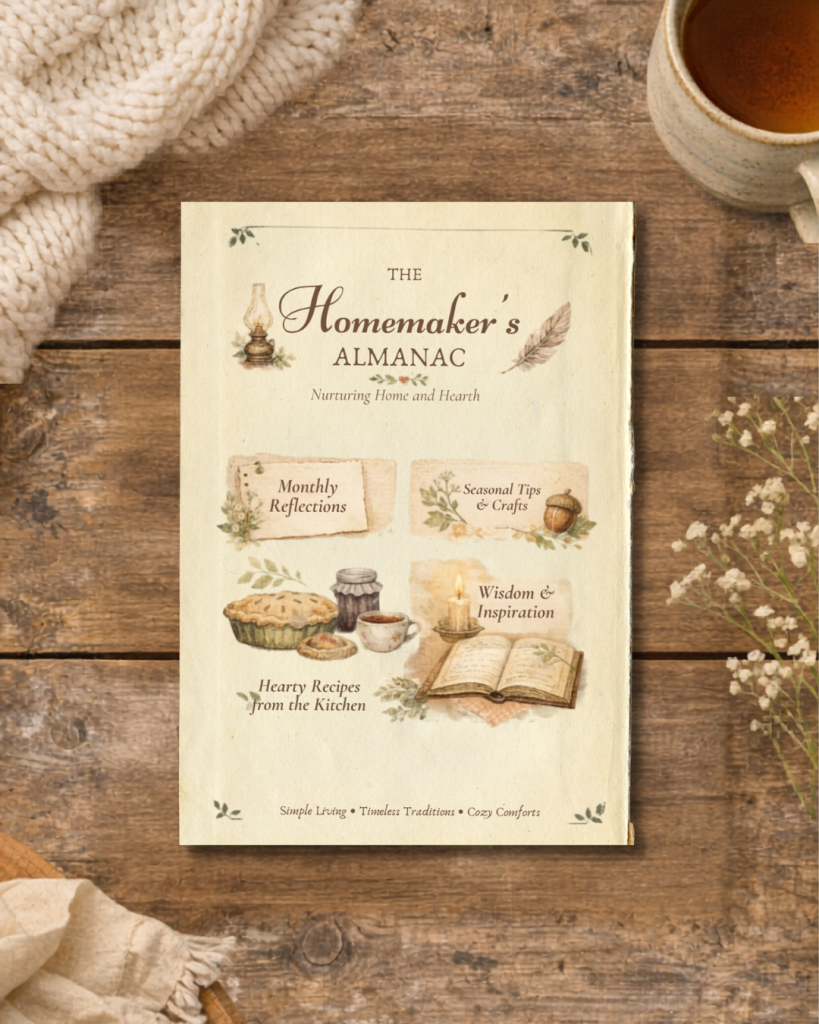
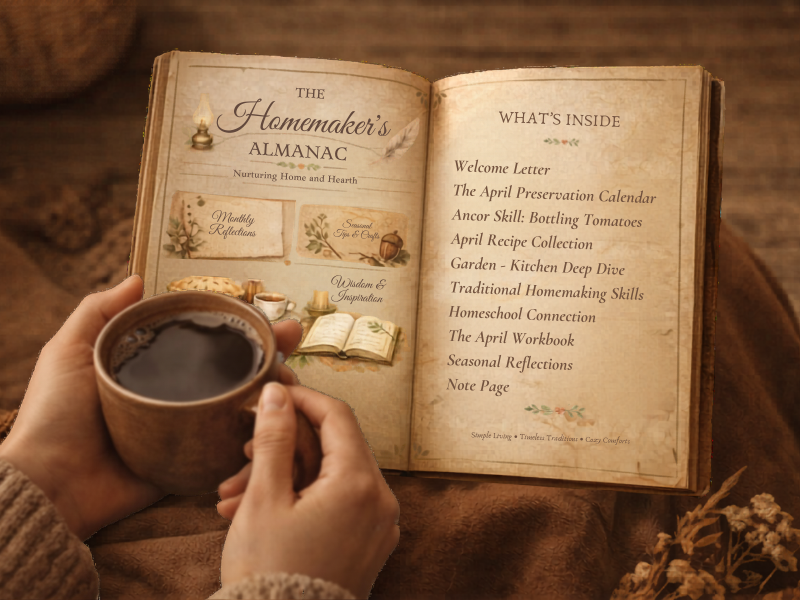
The Homemaker’s Almanac is a monthly digital publication from Hearth & Larder, built specifically for the South African seasonal calendar. Each issue follows what’s happening in our kitchens right now — what’s in season, what to preserve, how to build your larder through the months — rather than borrowing a template from the northern hemisphere.
It’s written for the parent who wants to involve their children in real kitchen work. For the home preserver who wants to understand the science, not just the recipe. For the homemaker who is tired of survival mode and ready to build something that feels sustainable and genuinely their own.
The April issue — our debut edition — focuses on early autumn in South Africa: the tomatoes still on the vine, the first quinces, the butternuts coming in thick. It covers preservation techniques, seasonal recipes, larder-building strategy, and the science behind why it all works. Subsequent issues will follow each season’s natural rhythm through our uniquely South African calendar.
Inside the April Issue
Seasonal produce focus: tomatoes, apples, pears, and butternut · Food preservation techniques for early autumn · Building your larder for winter · Science in the kitchen (homeschool-friendly) · A seasonal meal plan from a stocked larder · Practical systems for managing the homemaking mental load.
Homesteading Made Simple — Even If You Don’t Live on a Farm
One of the things I hear most often from the Hearth & Larder community is: “I love the idea of homesteading, but I live in a suburb.” Or: “I want to preserve food, but I don’t know where to start and I’m scared of getting it wrong.”
This is exactly why we built what we built. The kits. The guides. The Almanac. All of it is designed around one idea: traditional homestead skills, made simple and accessible for the modern South African home — whatever that home looks like.
You don’t need a plot of land to build a well-stocked larder. You need a seasonal mindset, a few reliable preservation techniques, and a guide that speaks to your climate, your produce, and your kitchen.
Free for April
Start with a Free Taster Issue of The Homemaker’s Almanac
Get a feel for what’s inside — seasonal larder guidance, preservation science, and practical homemaking systems, all written for the South African calendar. Download the Free Taster Issue
Our journey begins this April, with the first cool mornings of highveld autumn and a kitchen counter full of the season’s last tomatoes. I hope you’ll join us as we build something together — a larder, a rhythm, a home that knows what season it’s in.
One month at a time. One season at a time. Let’s build something that lasts.
— Marlé